Nutzung von Biokohle als CO2-neutrales Reduktionsmittel zur Herstellung von Agglomeraten aus eisenhaltigen Reststoffen
– English below – Français en dessous-
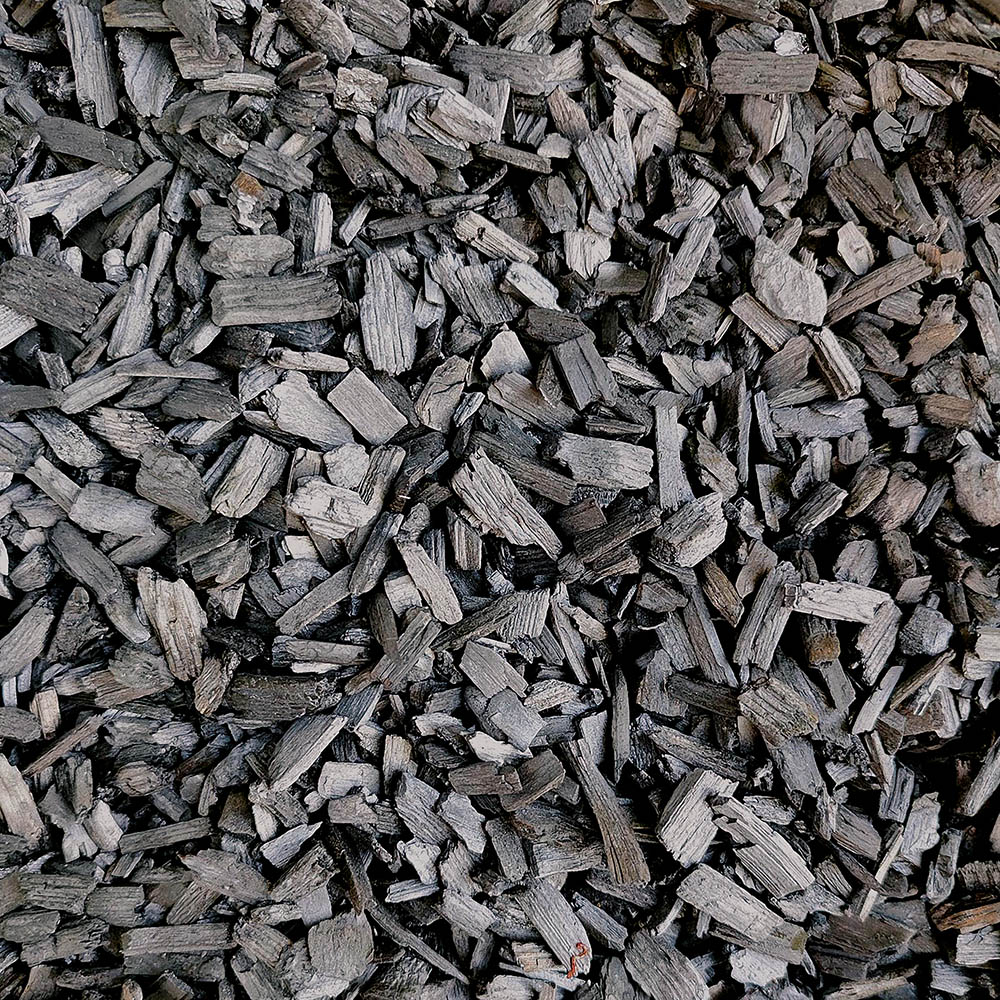
Ziel des Vorhabens ist die Nutzbarmachung von Biokohlen (auch Pflanzenkohle oder Biochar) als CO2-neutrales Reduktionsmittel in stempelgepressten Agglomeraten aus metallurgischen Reststoffen und biogenen Bindemitteln.
Erstmalig werden Rezepturen für selbstreduzierende Agglomerate erstellt, wobei werksinterne, feinkörnige und Fe-reiche Reststoffe aus der Eisengießerei mit geeigneten biogenen Bindemitteln unter dem Einsatz von Biokohlen kombiniert werden. Anschließend werden diese in den Schmelzprozess einer Eisengießerei mit einem Heißwindkupolofen eingebracht. Die Agglomerate ermöglichen dabei die Erschließung CO2-neutraler interner Fe-Recyclingkreisläufe für in der Stahl- und Eisenindustrie anfallenden Staub- und Schlammfraktionen, welche aufgrund technischer und wirtschaftlicher Restriktionen aktuell noch deponiert werden müssen. In diesen Stoffströmen liegen oftmals immense Mengen an oxidisch gebundenem Fe vor, welches potenziell zurückgewonnen werden kann und somit den Einsatz von Primärrohstoffen senkt.
Beitrag von Klimafarmer zur Forschung
Klimafarmer ist als KMU Teil des Projektkonsortiums, um die Pflanzenkohlen zur Verfügung zu stellen. Dabei wird insbesondere erprobt, welche Pflanzenkohle aus welchen regionalen, biogenen Reststoffen für die Herstellung von Agglomerat-Rezepturen geeignet sind.
Klimafarmer bringt sein weitreichendes Netzwerk zu Pflanzenkohle-Produktionen, Pflanzenkohle-Verarbeitenden Betrieben sowie ein breites Marktwissen ein. Außerdem erstellt Klimafarmer die vergleichende Ökobilanz zwischen dem konventionell betriebenen Heißwind-Kupolofenprozess und dem mit werksinternen Reststoffen (Agglomerate) betriebenen Prozess.
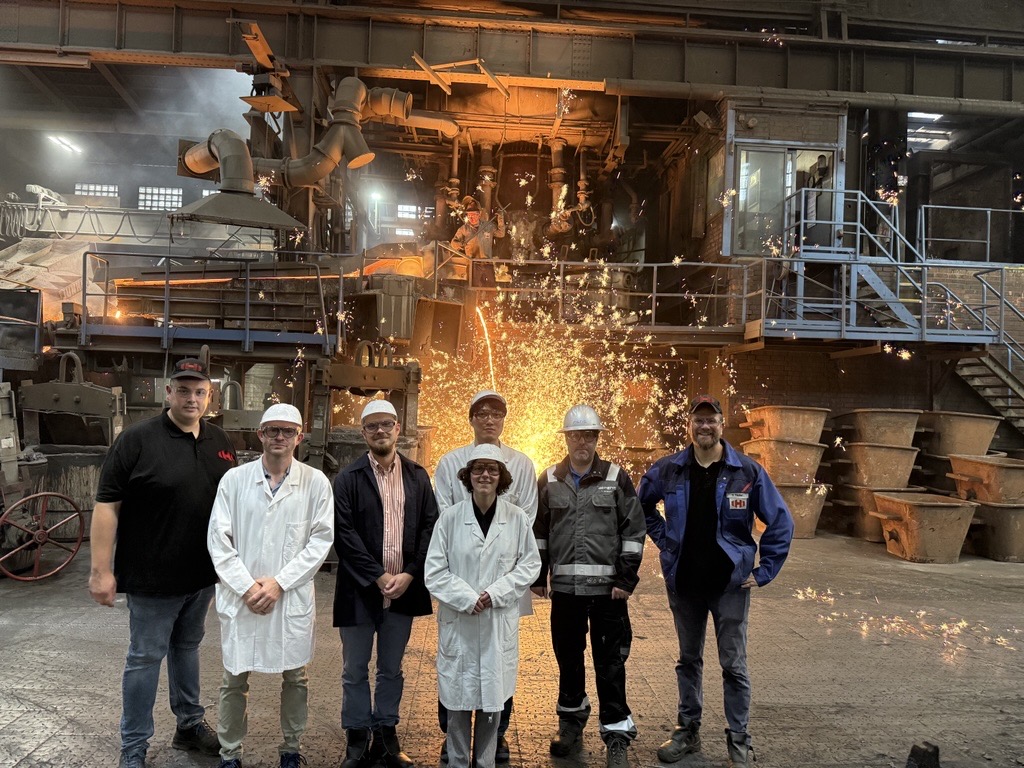
Besichtigung Isselguss
Die Projektpartner

IHI Isselguss
RWTH,
Dieses Projekt wird durch das Bundesministerium für Wirtschaft und Klimaschutz (BMWK) unter dem Förderkennzeichen KK5652301VB4 finanziert.
– English –
Use of biochar as a CO2-neutral reducing agent for the production of agglomerates from iron-containing residues
The aim of the project is to utilise biochar as a CO2-neutral reducing agent in stamp-pressed agglomerates made from metallurgical residues and biogenic binders.
For the first time, formulations for self-reducing agglomerates are being developed, combining fine-grained, Fe-rich residues from the iron foundry with suitable biogenic binders using biochar. These are then introduced into the melting process of an iron foundry with a hot blast cupola furnace. The agglomerates enable the development of CO2-neutral internal Fe recycling cycles for dust and sludge fractions produced in the steel and iron industry, which currently still have to be landfilled due to technical and economic restrictions. These material flows often contain immense quantities of oxidically bound Fe, which can potentially be recovered, thereby reducing the use of primary raw materials.
Klimafarmer’s contribution to research
As an SME, Klimafarmer is part of the project consortium responsible for supplying biochar. In particular, the project is testing which types of biochar from which regional, biogenic residues are suitable for the production of agglomerate formulations.
Klimafarmer contributes its extensive network of biochar producers and biochar processing companies, as well as its broad market knowledge. Klimafarmer also prepares a comparative life cycle assessment between the conventional hot blast cupola furnace process and the process using internal plant residues (agglomerates).
This project is funded by the Federal Ministry for Economic Affairs and Climate Protection (BMWK) under grant number KK5652301VB4.
– Francaise –
Untertitel FRA: Utilisation du biocharbon comme agent réducteur neutre en CO2 pour la fabrication d’agglomérats à partir de résidus ferreux
L’objectif du projet est d’utiliser le biochar (également appelé charbon végétal ou biochar) comme agent réducteur neutre en CO2 dans des agglomérats pressés à partir de résidus métallurgiques et de liants biogènes.
Pour la première fois, des formulations pour des agglomérats autoréducteurs sont créées, dans lesquelles des résidus fins et riches en fer provenant de la fonderie sont combinés avec des liants biogènes appropriés à l’aide de biochar. Ceux-ci sont ensuite introduits dans le processus de fusion d’une fonderie à l’aide d’un four à coupole à air chaud. Les agglomérats permettent ainsi de mettre en place des cycles de recyclage interne du fer neutres en CO2 pour les fractions de poussière et de boue produites dans l’industrie sidérurgique et métallurgique, qui doivent actuellement encore être mises en décharge en raison de restrictions techniques et économiques. Ces flux de matières contiennent souvent d’énormes quantités de fer lié à l’oxyde, qui peut être potentiellement récupéré, réduisant ainsi l’utilisation de matières premières primaires.
Contribution de Klimafarmer à la recherche
En tant que PME, Klimafarmer fait partie du consortium du projet afin de fournir le charbon végétal. Il s’agit notamment de tester quels charbons végétaux issus de quels déchets biogènes régionaux conviennent à la fabrication de formulations d’agglomérats.
Klimafarmer apporte son vaste réseau dans le domaine de la production de charbon végétal, des entreprises de transformation du charbon végétal ainsi qu’une connaissance approfondie du marché. Klimafarmer établit également un bilan écologique comparatif entre le procédé conventionnel du four à coupole à vent chaud et le procédé utilisant des résidus internes à l’usine (agglomérats).
Ce projet est financé par le ministère fédéral allemand de l’Économie et de la Protection du climat (BMWK) sous le numéro de référence KK5652301VB4.